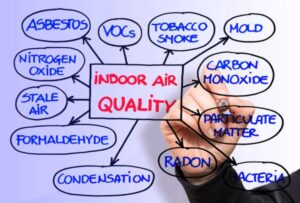
Environmental concerns can arise in almost any type of real estate transaction. They are not limited to old industrial sites or obviously contaminated properties. A residential buyer may encounter radon, mould, older insulation, a buried fuel tank or questionable plumbing. A commercial purchaser may need to consider historical land uses, asbestos-containing building materials, environmental contamination or the activities of neighbouring properties.
In many cases, the concern can be investigated, quantified and managed. The more difficult problem is recognizing that something deserves investigation before the buyer becomes committed to the property.
That distinction is important because environmental and building-related risks are often not obvious during an ordinary showing. Radon is invisible and odourless. Asbestos may be concealed within building materials. Soil or groundwater contamination may originate from activities that occurred decades earlier, while mould can exist behind finished walls after the visible evidence of moisture has been repaired.
The purpose of environmental due diligence is therefore not to create fear around older or more complicated properties. It is to identify questions early enough that the buyer can obtain reliable information, understand the implications and decide whether the remaining risk is acceptable.
Environmental Risk Is Broader Than Contaminated Land
When people hear the term environmental concern, they often think first about contaminated industrial land. That is certainly an important part of commercial and industrial due diligence, but environmental risk in real estate is much broader.
Indoor air quality, moisture, historic building materials, fuel storage, plumbing systems and previous property uses can all affect safety, renovation costs, financing, insurance and future marketability. Some issues are primarily health concerns. Others are physical property risks, while some can create regulatory or legal complications.
The appropriate response also varies. Radon can often be mitigated effectively once it is identified. Suspected asbestos-containing material may be manageable when left undisturbed but require specialized procedures before renovation. A buried leaking fuel tank or contaminated soil can present a much more complicated investigation.
This is why environmental due diligence should begin with understanding what the concern actually is rather than treating every environmental issue as though it carries the same level or type of risk.
Radon Cannot Be Identified During a Property Showing
Radon is a naturally occurring radioactive gas produced by the breakdown of uranium in soil and rock. It can enter buildings from the ground and accumulate indoors, but because it has no colour, smell or taste, the only reliable way to determine the radon level in a property is through testing.
Health Canada’s current guideline recommends corrective action where the average annual radon concentration in the normally occupied area of a building exceeds 200 becquerels per cubic metre (Bq/m³). Health Canada also emphasizes that there is no completely risk-free level of exposure and recommends taking action sooner as the measured concentration increases.
Current national research has made the issue increasingly relevant for homeowners. Health Canada now estimates that approximately one in five homes in Canada has a high radon level, and radon exposure is considered the leading cause of lung cancer after smoking.
The important real estate lesson is that you cannot reliably predict a home’s radon level from its age, appearance, neighbourhood or the result from a neighbouring property. Two houses beside one another can test differently because construction, foundation conditions, soil and air movement all influence how radon enters and accumulates.
For a homeowner, long-term testing is relatively straightforward. Health Canada recommends testing for at least three months, ideally during the heating season when homes are generally more closed to outdoor air. DIY kits are available, or a C-NRPP-certified measurement professional can conduct testing.
That testing period also explains why radon does not always fit neatly within a conventional five- or ten-day residential due diligence condition. Buyers, sellers and their advisors may need to consider how the issue will be addressed contractually where radon testing is important to the transaction.
Professional Insight
Radon is a good example of why due diligence sometimes extends beyond what can be learned during an inspection period. The right question may not be whether someone can provide an immediate answer, but whether the transaction has been structured so the buyer understands how the unanswered risk will be investigated and addressed.
A High Radon Reading Does Not Necessarily Make the Property Unsuitable
A high radon level is important, but it does not automatically mean a property should be avoided.
Health Canada identifies active soil depressurization as the most common mitigation method and states that properly implemented mitigation can substantially reduce radon concentrations. The appropriate solution depends upon the building and measured level, so certified radon professionals should be involved where mitigation is required.
For a buyer, this changes the analysis. Instead of viewing radon as a simple pass-or-fail property condition, the buyer can determine the measured level, understand the recommended corrective work, obtain an estimate of cost where appropriate and decide how that information affects the transaction.
The concern becomes known and manageable, which is often preferable to a risk that remains completely unidentified.
Urea Formaldehyde Foam Insulation Requires Context
Urea Formaldehyde Foam Insulation, commonly known as UFFI, was used primarily as retrofit insulation in older buildings before its use was prohibited in Canada. The material was injected into wall cavities as a foam and then hardened as it cured.
The historical concern arose from formaldehyde emissions, particularly during installation and curing, and from problems where the material became wet or was installed improperly. Health Canada continues to identify formaldehyde as an indoor-air contaminant capable of irritating the eyes, nose and throat and worsening asthma symptoms, and the manufacture, importation, advertising or sale of foamed-in-place urea formaldehyde thermal insulation remains prohibited in Canada.
For real estate purposes, the presence or suspected presence of older UFFI should be investigated rather than diagnosed visually by the buyer or REALTOR®. Historical injection holes, visible foam around rim joists or other indicators may suggest that insulation was added, but those observations do not by themselves establish exactly what material is present or whether there is an active indoor-air concern.
The more useful questions are whether UFFI is actually present, what condition it is in, whether moisture or deterioration exists and whether any proposed renovation is likely to disturb it.
Vermiculite Does Not Automatically Mean Asbestos
Vermiculite insulation creates another situation where the name of a material can cause more alarm than the evidence necessarily supports.
Vermiculite is a lightweight mineral material that was widely used as insulation because it is fire resistant and provides effective thermal properties. Some historic vermiculite—most notably Zonolite material originating from the Libby Mine in Montana—was contaminated with asbestos. However, CCOHS specifically notes that not all vermiculite insulation contains asbestos.
The concern arises when asbestos-containing material is disturbed and fibres become airborne. CCOHS recommends that suspected vermiculite insulation be left undisturbed and professionally tested before renovations, demolition or other work that could release fibres.
This is particularly important for buyers considering major renovations. An attic containing vermiculite may remain relatively undisturbed for years, but converting the attic, changing wiring, adding insulation or undertaking structural work could materially change the exposure risk and project cost.
The environmental issue therefore needs to be considered together with the buyer’s intended plans for the property.
Asbestos Is Often a Renovation Issue as Much as a Property Issue
Asbestos-containing materials can exist in older residential, commercial and industrial buildings in many forms, including insulation, floor tiles, roofing materials, pipe and boiler insulation, textured finishes and other building products.
Its presence does not necessarily mean occupants are being exposed.
CCOHS explains that asbestos becomes hazardous when fibres are released into the air and inhaled, which can occur when asbestos-containing material deteriorates, is cut, sanded, removed or otherwise disturbed. Material in good condition may not be releasing fibres.
That makes the buyer’s future plans particularly important.
A purchaser acquiring an older commercial building with no intention of disturbing existing materials may face one management question. A purchaser planning substantial demolition and renovation may face a very different cost and regulatory issue because suspected materials need to be identified and handled appropriately before work begins.
Environmental due diligence should therefore consider not only what exists today, but what the buyer intends to do with the property after closing.
Lead-Based Paint Deserves Similar Renovation Awareness
Older buildings may also contain lead-based paint or other historic coatings containing lead.
The potential risk becomes particularly relevant where painted surfaces are deteriorating, producing dust or being disturbed during renovation. Young children are especially vulnerable to lead exposure, which is why older residential properties often receive more attention in this area.
For a purchaser planning significant renovation, suspected lead-containing material can affect demolition procedures, worker protection, disposal costs and renovation planning.
As with asbestos, the appropriate professional response is investigation rather than assumption. The age of a building may indicate that lead-containing materials are possible, but testing and professional assessment provide a more reliable basis for deciding what needs to be managed.
Mould Is Usually a Moisture Story
Mould is commonly treated as the environmental problem itself, but in many buildings it is more useful to think about the moisture condition that allowed the mould to develop.
Health Canada recommends controlling humidity, promptly repairing water damage and addressing visible or concealed mould growth. It also notes that indoor mould can represent a health hazard, while the individual health response varies and there is no simple air-testing threshold that defines whether a building is safe.
For buyers, that means simply cleaning visible mould may not answer the important question.
Where did the moisture come from?
A leaking roof, foundation seepage, plumbing failure, poor ventilation or condensation problem may continue producing favourable conditions for mould after cosmetic cleaning has been completed.
A useful investigation therefore looks for both the mould and its cause. If the underlying water problem remains unresolved, remediation may address the symptom without preventing recurrence.
This becomes especially relevant in renovated properties where new finishes can conceal older moisture damage.
Kitec Plumbing Is More a Building-System Risk Than an Environmental Hazard
Kitec plumbing appears in the original article and is worth preserving, although I would place it somewhat differently. It is primarily a building-system and insurance concern rather than an environmental contaminant.
Kitec was a composite plumbing system installed in many Canadian properties during the late 1990s and early 2000s. Concerns developed around premature deterioration of pipes and fittings, potentially resulting in leaks and significant water damage.
For a buyer, identifying Kitec can therefore raise questions about remaining service life, replacement cost and insurance availability or conditions.
The important point is not simply that a particular colour of pipe has been observed. Similar-looking materials can exist, and a home inspector or qualified plumbing professional should confirm the system where its presence matters to the transaction.
Where replacement is likely, the buyer should understand enough about the scope and potential cost to incorporate the issue into the purchase decision rather than discovering it after closing.
Fuel Oil Tanks Can Create Both Building and Environmental Risk
Fuel oil tanks can be located above ground, inside a building or underground. The main environmental concern is leakage, particularly where contamination can enter soil or groundwater before the problem becomes obvious.
Ontario’s Technical Standards and Safety Authority regulates fuel-oil equipment and specifically requires underground fuel-oil storage tanks to be registered.
Where an older property currently uses—or historically used—fuel oil, buyers may want to understand where the tank is located, whether underground tanks were properly registered or removed, whether any leakage occurred and what records are available.
A disused fill pipe or unexplained excavation can justify further questions, but should not by itself become a conclusion that contamination exists.
If a leak is suspected or known, professional investigation becomes particularly important because the consequences may extend beyond simply replacing the tank. Soil remediation, groundwater concerns, regulatory involvement and neighbouring-property impacts can all potentially affect the transaction.
Land Contamination Can Come From the Property—or Somewhere Else
Land contamination is often the environmental concern that receives the greatest attention in commercial and industrial transactions.
The contamination may have been caused by activities conducted on the property itself, but it can also migrate from a neighbouring or nearby site through soil or groundwater.
That means a buyer cannot understand environmental risk simply by looking at the current occupant.
A clean modern warehouse may sit on land that was previously used for manufacturing, automotive repair, fuel storage or another activity carrying environmental risk. Conversely, a property whose current operation appears industrial may have a well-documented environmental history and no identified contamination.
Historical research therefore becomes an important part of environmental assessment.
Depending upon the property, due diligence may involve a Phase I Environmental Site Assessment reviewing historical uses, records and surrounding properties, followed by intrusive investigation where the initial assessment identifies areas of potential environmental concern.
For investors and commercial purchasers, environmental findings can affect far more than remediation cost. They can influence financing, insurance, redevelopment options, regulatory obligations and future resale.
Wells and Groundwater Can Increase the Complexity
Environmental concerns become particularly important where the property or neighbouring properties rely upon wells for drinking water.
Contamination affecting groundwater can create a direct water-quality concern in addition to soil contamination. Rural, commercial and industrial purchasers may therefore need to consider both environmental history and the property’s water supply.
The appropriate investigation will depend upon the site and potential contaminant, but the broader principle is straightforward: environmental risk does not necessarily stop at the legal property line.
Water and soil conditions can connect several neighbouring properties to the same environmental issue.
Former Grow Operations Should Be Evaluated Through Present Condition
The original article also addresses properties used for marijuana grow operations. We recently developed a more complete chapter on that subject, so I would keep this section intentionally concise rather than duplicating that article.
The significant property concerns associated with intensive cannabis cultivation are generally the physical changes or damage that may have resulted: excess humidity, mould, altered electrical systems, unusual ventilation or structural modifications.
The appropriate analysis is therefore not simply whether cannabis was once present. Buyers should understand what happened to the property, what damage resulted, whether remediation was completed and what documentation exists to support the current condition.
Where credible concerns arise, inspections and specialized investigation should focus on the underlying property risk rather than relying solely on the stigma associated with the property’s history.
Environmental Issues Can Affect Financing and Insurance
An environmental concern does not exist only between the buyer and seller.
Lenders and insurers may have their own requirements.
A lender financing an industrial acquisition may require an environmental assessment before advancing funds. An insurer may ask questions about underground fuel tanks, Kitec plumbing, mould history or other property conditions before offering coverage or may impose particular conditions.
That creates an important transaction-management consideration.
Where a potentially significant environmental or building-system concern has been identified, waiting until immediately before closing to investigate financing or insurance consequences can create unnecessary risk.
Those conversations are more useful during due diligence, while the buyer still has an opportunity to evaluate the complete implications.
Environmental Findings Should Lead to Decisions
Environmental due diligence is most useful when it does more than produce a report.
Suppose a Phase I Environmental Site Assessment identifies a historical use requiring further investigation. The buyer then needs to decide whether to undertake a Phase II assessment, renegotiate timing, request additional information or reconsider the acquisition.
If radon testing identifies an elevated concentration, the next question is whether mitigation is required and what that work is likely to involve.
If asbestos-containing material is identified, the buyer may need to determine whether it can remain safely managed in place or whether planned renovations will require abatement.
Every meaningful finding should therefore lead to a decision about acceptance, further investigation, mitigation, negotiation or withdrawal.
That is what turns environmental investigation into due diligence rather than simply information gathering.
Professional Insight
Discovering an environmental concern does not automatically mean the transaction should end. It means the buyer now has better information. The important next step is determining whether the issue can be quantified, managed or reflected appropriately in the price and transaction structure.
Sellers Benefit From Understanding Environmental Issues Before Listing
Environmental due diligence is not only a buyer activity.
A seller who knows that a property has an old fuel tank, previous industrial use, asbestos-containing materials or a historical moisture problem may benefit from understanding the issue before the property is marketed.
Pre-listing investigation can provide the seller with choices.
A problem may be remediated. Documentation may be assembled. An environmental report may clarify a historical concern that buyers would otherwise treat as unknown risk. In another situation, the seller may decide not to correct the issue but instead disclose appropriate information and price or structure the transaction accordingly.
That is generally preferable to discovering an important environmental issue for the first time while a purchaser is already in a conditional due diligence period and deciding whether to terminate.
Disclosure Requires Careful Legal and Professional Judgment
The original article describes seller disclosure obligations in fairly categorical terms. I would make this section more nuanced.
Ontario’s law concerning latent defects is fact-specific and can become complicated. RECO itself advises seller representatives that sellers must disclose latent defects where the law requires it and recommends obtaining a legal opinion where there is uncertainty about whether a particular defect must be disclosed. RECO also notes that concealing a defect or being wilfully blind to its existence can create additional problems.
Real estate professionals have their own obligations concerning material facts and the information they know about a transaction, but they should not attempt to resolve complicated legal disclosure questions independently.
For buyers, the practical lesson is equally important. Disclosure obligations do not replace due diligence. Sellers may have limited knowledge, particularly where an environmental issue originated before their ownership or is concealed within the building or beneath the property.
A buyer should therefore use seller information as one component of the investigation rather than as a substitute for appropriate professional review.
Representations and Warranties Can Allocate Environmental Risk
Environmental concerns can also become contractual issues.
A buyer may seek representations or warranties concerning underground tanks, hazardous substances, environmental notices or previous uses. A seller may limit those statements to their actual knowledge or resist making assurances about matters they cannot reasonably verify.
The negotiation is effectively determining who bears the risk if the environmental assumption later proves wrong.
In a commercial transaction, environmental clauses may also address access for testing, confidentiality, restoration following intrusive investigation, disclosure of reports, responsibility for remediation or conditions that must be satisfied before closing.
These provisions should fit the actual environmental concern rather than relying upon generic wording copied from another transaction.
Where the potential consequences are significant, legal and environmental advice may both be required.
Different Concerns Require Different Professionals
One of the recurring themes in environmental due diligence is that no single professional can answer every question.
A home inspector may identify visible mould, suspect insulation or unusual plumbing, but specialized testing may be required. An environmental consultant can assess soil and groundwater conditions but does not replace a lawyer advising on liability or contractual risk. An electrician assesses electrical systems, while a radon professional evaluates measurement and mitigation.
The real estate professional’s role is often to recognize when a concern has moved beyond ordinary property observation and help ensure the appropriate expertise becomes involved.
That does not mean every older property requires an army of consultants.
It means the investigation should become more specialized when the evidence or intended use justifies it.
Environmental Risk Is Also Future Resale Risk
One of the most overlooked consequences of an environmental concern is what happens when the purchaser eventually becomes the seller.
A buyer may be prepared to accept a particular issue today because the price appropriately reflects it. Several years later, another purchaser, lender or insurer may ask exactly the same questions.
That makes documentation particularly valuable.
Environmental assessments, remediation reports, permits, tank-removal records, radon mitigation documentation, asbestos reports and other professional records can help a future purchaser understand what was identified and what was done about it.
A resolved issue supported by credible documentation may be considerably easier to explain than a property history surrounded by uncertainty.
This is another reason environmental due diligence should consider the entire ownership period rather than only whether the buyer can get through closing.
Final Thoughts
Environmental concerns can make a real estate transaction more complicated, but complication does not necessarily mean the property should be avoided.
Radon can be measured and mitigated. Suspected asbestos or vermiculite can be tested and professionally managed. Mould can be investigated by identifying and correcting the moisture source. Fuel tanks and environmental contamination can be evaluated, while building-system issues such as Kitec plumbing can be incorporated into repair and replacement planning.
The common requirement is information.
A buyer needs to understand what has been identified, how significant it is, what further investigation is necessary, what it may cost to address and whether financing, insurance, renovation plans or future resale are likely to be affected.
Sellers benefit from the same understanding because unresolved environmental uncertainty can become a negotiating issue once the property reaches the market.
The objective of environmental due diligence is therefore not to prove that a property has no risk. Few properties could satisfy that standard.
It is to replace uncertainty with enough reliable information that the remaining risk can be understood and deliberately accepted, managed, negotiated or rejected.
In many transactions, the environmental concern itself is manageable.
The greater danger is discovering it after the buyer no longer has meaningful choices about what to do with it.
Guidance for Smarter Real Estate Decisions.
This article provides general real estate information and is not environmental, engineering, health, legal or insurance advice. Environmental risks and disclosure obligations depend upon the particular property and circumstances. Buyers, sellers and property owners should obtain advice from appropriately qualified professionals where necessary.
Written by Rodney Harvey, Broker of Record at Konfidis, Brokerage providing advisory-focused commercial, industrial, investment, and real estate brokerage services across Oshawa, Durham Region, and Ontario.
Continue Building Your Transaction Knowledge
You may also find these articles helpful:
 Clause Architecture: Best Practices for Structuring Clear, Enforceable, and Operationally Effective Clauses
The Risks of Poorly Drafted Clauses in Ontario Real Estate
Common Litigation Issues in Agreements of Purchase and Sale
What Real Estate Litigation Teaches Buyers in Ontario
Why Conditional Clauses Matter in Ontario Real Estate
Contracts and Clauses You May See in Ontario Real Estate Transactions
How Unclear Wording Creates Financial, Operational, and Relationship Risk
“If you require professional guidance regarding representation structure, transaction strategy, commercial leasing, investment property, due diligence, or real estate advisory services, consultation and representation options may be available depending on your objectives and circumstances.”